China’s AI Glasses Boom Signals New Battleground for Mass Tech Adoption
中国AI眼镜热潮开启大众科技新战场
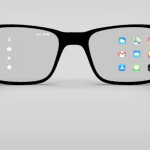
连续两年,中国春节期间人形机器人抢尽风头,部分产品因表演走红而迅速售罄。然而,专家指出,高价格与技术限制仍使其难以短期内走入家庭。相比之下,更具实用性和性价比的AI智能眼镜正成为真正有望实现大众普及的产品。目前约有近70家公司进入该领域,行业被称为“百镜大战”。分析人士预测,2025年或将成为AI眼镜规模化普及的元年。中国科技媒体称,AI眼镜已成为春节消费核心产品之一。政府补贴政策是需求增长的重要推力。
Humanoid robots grabbed attention during China’s Spring Festival for the second straight year, with some models selling out after high-profile performances. Yet despite the hype, experts say high prices and technical constraints will delay widespread household adoption. Instead, a more practical and affordable device is emerging as the true candidate for mass use: AI-powered smart glasses.
With nearly 70 companies now competing, the sector has been dubbed the “War of 100 Glasses.” Analysts predict 2025 could mark the first year of large-scale adoption. During the recent holiday season, AI glasses sales at Shenzhen’s Huaqiangbei electronics market surged 80% year-on-year, far surpassing the 30% growth seen in overall IT products. Chinese tech media described AI glasses as a core product in Spring Festival consumption.
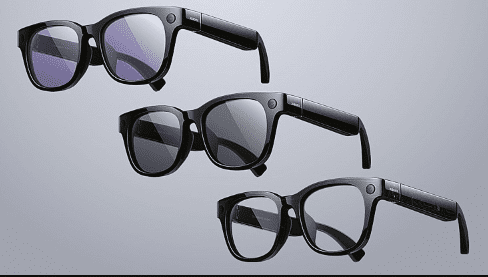
Government incentives are fueling demand. A subsidy program offering 15% discounts on smart devices priced up to 6,000 yuan has boosted consumer interest. Major firms including Baidu, Xiaomi, and Alibaba have launched new products since late 2024, intensifying competition. During the Singles’ Day shopping festival in November, smart glasses sales soared 346%, signaling accelerating momentum.
A wave of product launches in late 2024 marked a turning point. INMO introduced new models in October, followed by Baidu, Rokid—partnering with eyewear brand Bolon—and Alibaba in November. Automaker Li Auto joined in December. Alibaba’s Quark AI glasses attracted attention by offering foreign language translation and mobile payment features at roughly 70% of the price of Meta’s Ray-Ban smart glasses. ByteDance is expected to enter the market this year.
Tech giants are increasingly viewing smart glasses as a key hardware platform for deploying large language models in real-world settings. Unlike smartphones, glasses can collect first-person visual and spatial behavioral data, offering valuable inputs for AI systems. Startups focused on sports and travel applications are also expanding the ecosystem.
China’s strong supply chain provides a critical advantage. Roughly 80% of smart glasses components—including optical modules, structural parts, and assembly—are sourced domestically. Even global players like Meta and Google rely heavily on Chinese suppliers. Analysts suggest this manufacturing dominance could mirror China’s success in humanoid robots and accelerate mass production.
Although Meta currently leads the global market with about 75.7% share, China’s production scale and government support may shift the balance. According to IDC, China’s smart glasses shipments are expected to rise from 2.9 million units last year to 4.91 million this year, with a projected annual growth rate of 55.6%. Industry observers believe China’s AI glasses market is entering a full-scale expansion phase.